Archive for Surgery

Can medicine be simple?

// January 11th, 2010 // No Comments » // Family, Rants, Surgery

time.jpg

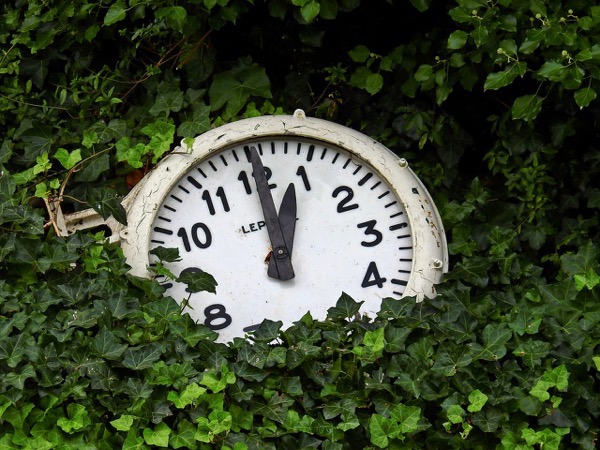
My life feels increasingly complex. Despite feeling completely swamped, I never seem to get much done. My husband and I discuss those days before we had kids and wonder what it was that we did. I can remember some things - slow cooking, planning a menu, even. I miss all that stuff. Like kids toys, complexity expands to fill the available space.

As I work through this process, I have been following the ideas of others, based around non-medical work. There is clutter I can cut out of my life, just like anyone else. Medical and paramedical work brings some extra challenges to simplication - how do you simplify when you have to keep up with everything?

As I think more about it, medical life parallels the rest of society. We used to live simpler lives, with most of our impact on the people in our immediate neighbourhood. Society used to be about individuals interacting together and affecting each other. The local shop keeper changed what stock they kept to cater to the 20 families that were purchasing from it. Barter between neighbours was a form of commerce, and children grew up knowing others in their street and being cared for by neighbourhood parents. The information boom made our choices more informed, but more difficult. And we started to impact people in a much larger geographical area.

Originally, Doctors dealt with their community and were judged by their community. If they had a low incidence of Dengue Fever, then they knew very little about it. Their training was very broad, but through experience, they learnt a lot about their relevant demographic. The individual practitioner based their decisions on the thousands of patients they had personally seen. If something rare turned up, they might flounder, but their patients could also recognize that it was an extreme situation. Most patient encounters had no impact beyond a 100 km radius. Maybe we should call this “slow medicine” in the style of “slow food.”

Today, everything is a lot faster. We may see less patients, but we do more to them, and use more information to do so. We are not only expected to keep up with the fates of patients across the world, but even conditions outside our own field of expertise. Instead of knowing lots of common things well, we focus on an increasingly smaller sliver of health. Conditions that could once only be diagnosed at autopsy can now be be discovered in the sick patient by using tests that are based more around electronic algorithms than doctor skill. Our work is increasingly information driven rather than relationship driven. So we have increased pressure to stay in touch, keep up, know everything.

Medical information is changing rapidly. Even 12 years ago when I was in Medical school it was sufficient to buy textbooks, and use them as a reference. And qualified doctors would sit down with their pile of subscribed journals and read them up to date once a month or so. Now I subscribe to electronic table of content alerting, to know the new information quickly. New treatments are rapidly adopted, so that once long term side effects are understood, the treatment burden is huge. At my exam, I am expected to know current best practice, and can’t afford to base my decisions on a textbook that may be years out of date.

So medicine is complicated. So what?

Medical science makes itself complicated. Patients via inadequate health systems create pressure. We all know that we could choose to work 18 hours a day, and we would easily find patients to see. So in order to stay still, we need to actively reduce the complexity. Obviously we can’t ignore reference information. But perhaps we can change the way we behave as physicians. We can set limits on our own skills, expectations and obligations.

I am not an expert at simplicity. I hardly know where I will start to sort this out. I do know there is a difference in the way people practice. I have registrar friends who feel it is important to stay later than their bosses, just for the sake of it. Other colleagues seem to believe there is a competition to start earlier and leave later. But I recently had a conversation with a colorectal surgeon who helped some of his six children build two billy-carts for a derby, and race them one weekend. I suspect he has a different relationship with his family than the others.

I have an opportunity. I have not worked clinically for some years. I have not studied clinical medicine for most of that time. So I am allowed to start again. I can decide what limits I want to have. I can choose to do whatever is within my influence to practice “slow medicine.” I dream that one day I will be a surgeon who is able to focus single-mindedly on the task at hand. I am not aiming to not be busy, but I choose to keep focus, stay healthy and not lose myself.

Picture via zoutedrop

Share/Save/Bookmark

Mechanics and Surgeons

// January 8th, 2010 // No Comments » // Health, Surgery

car.jpg

I picked up my car from the mechanic yesterday, and I was reminded of the classical stereotype of a surgeon with no bedside manner, and a condescending air.

Our mechanic is an older guy from a Mediterranean ethnic background, and I’m sure that had some impact on his behaviour to me. Within minutes of arriving to pick up the car with my husband, he had started discussing me and my driving with my hubby. I felt like a 50s hausfrau, a kept woman.

I have since been examining my negative reaction, and I guess I can’t get insulted about the suggestion that I know nothing about cars, because I don’t. But I am insulted by being treated like a child, and condescended to.

It strikes me that this is the exact situation many patients are in. I have recently had a bout as a patient consumer, and it didn’t really bother me, partially because I am familiar with the institutions, and I can trust well-chosen doctors and take their advice.

Untrained patients have no idea about medical details, physiology, anatomy and pathology. Most don’t understand the concept of risk. Perhaps there is also the assumption that we are out to rip them off, like mechanics. If patients can’t trust, they must always be double-thinking, checking up with their neighbours and the internet, and other sources. You add a busy, tired surgeon into the mix, and you get someone who is (sometimes) vague, is not always sure in themselves what the treatment is, and I can understand the seed of the stereotype.

I can’t help but wonder why surgeons are targeted more than other doctors, though. Are we less decisive? More untrustworthy? Look richer? Less able to communicate with normal people?

Image Credit: MikeBaird

Share/Save/Bookmark

Reflections on Med School

// November 22nd, 2009 // No Comments » // Family, Surgery

cris_operating.jpg

Last night I attended my Medical School Reunion. It was 10 years ago that we sat our final exams, and ducked out from the anonymity of studenthood.

I was really nervous about attending the reunion, because I felt it would be a celebration of achievement. What else could I expect when 80-odd overachievers get together and catch up on the last 10 years?

My post med-school career has been unconventional, by Melbourne standards. I often talk about how I start a lot of stuff, but haven’t managed to finish anything yet. I have completed one year of general surgical training (out of four), been working on a PhD for 5 calendar years (three academic years), almost finished creating my family, only just starting raising my family….

Most of the doctors that met last night were either finished or finishing their fellowships in their chosen fields. They were in their permanent practice location. Some were even totally grown up - families, houses, exams far behind them, simply living and working nine to five (Seven to seven, with weekends and on call).

However some doctors were trapped, in one way or another. A woman who was forced into pure gynaecology because she couldn’t combine more kids and the vicious on call of obstetrics. An only child who had a bedtime of 9pm because both parents work late. A radiologist waiting to have children because his wife couldn’t figure out how to break her career. An armed forces doctor who was told to become a GP, and now is looking at retraining in Psych with a with a young family. A trainee who traded photos of her guinea pigs with the baby photos of others.

I don’t think all these problems are specific to medicine, but just to the way life works. If you do manage to achieve everything, it takes a long time and comes with lots of compromise.

A “famous” man (as seen on medical reality TV) told me last night that the only solution was to get it all finished in the end - then it looks like you planned it.

Pic credit: That’s me. Just out of Med school.

Share/Save/Bookmark

Fit to be a patient

// June 23rd, 2009 // 3 Comments » // Family, Surgery

fat.jpg

For those that follow my twitter feed, it will be no surprise that I have been on a fitness kick. This has extended to 6am group personal training. Do you know how cold it is at 6am in Melbourne at the moment? And how warm it is in bed curled up with one year old, three year old or handsome man?

Without becoming a crying, fat person, I wanted to explain my motivation. It is all related to my work. Operating on someone is one of the more intimate interactions you can have. You get to know what they look like on the inside, and not in some vague, philosophical way. You get to touch their fat. Ewwwhgh.

I work in an affluent western area, so our patients are mostly overweight, especially by the time they get bowel cancer in their sixties or seventies. And operating on a fat person can be really, really difficult. It is physical tiring to manipulate that extra flesh. And the fat is ubiquitous - everywhere and always in the way. The anatomy is harder to see, so the “figuring out where you are” phase of an operation lasts a lot longer.

I have been able to ignore the similarities between my physique and that of my difficult patients. I am young enough that being a surgical patient is unlikely. Then I had an emergency caesarean section, and realised I am at risk of needing surgery.

So I am trying to lose weight so I won’t be the fat anaesthetised person. I want to be the one where the surgeons are amazed at the beautiful anatomy. I know it’s a little wierd, but that is what counts for me.

Image credit

Share/Save/Bookmark